Answers from Lee Vandervis

[!ai]
Takes contrarian anti-cycling stance, arguing current infrastructure is costly and underused. Uniquely prioritizes Portsmouth Drive crossing while opposing broader cycling expansion. Advocates removing One-Way cycleways to restore car parking. Views most active transport investment as financially unsustainable and dangerous.

Hi Devonia.

The current One-Way cycleway has been costly and underused for over a decade.

Let’s relocate this cycleway to safer Leith Street, through the University and beautiful Botanic Gardens, cutting out the dangerous One-Way streets cycleway.

Removing the One-Way concrete barriers would restore hundreds of much needed car parks to access shops, the Hospital, Museums, and University.

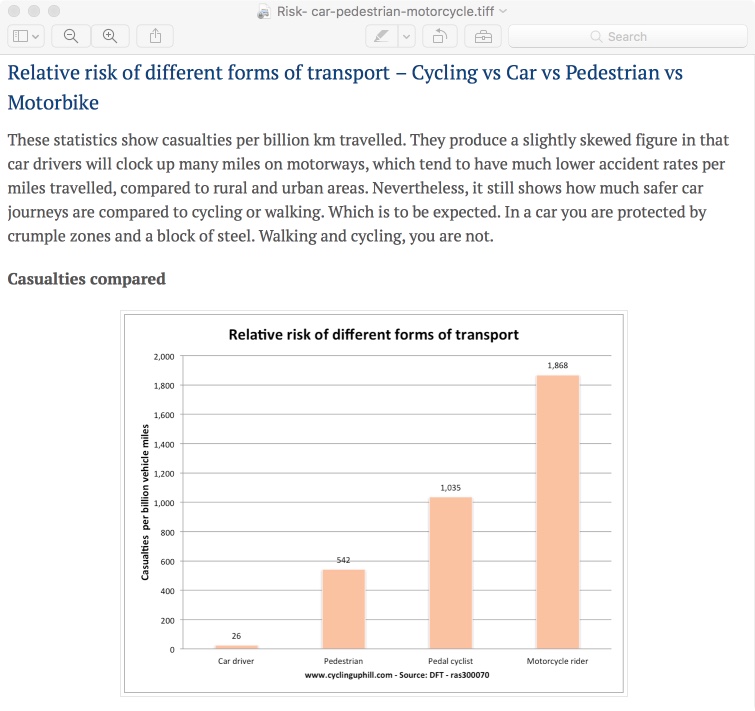
Your assumption that I will be advocating for even more active transport use is misplaced. Cyclists are especially vulnerable as much data like this shows that cyclist are 10 times more likely to die on City roads that motorists.

Getting inexperienced cyclists to mix with heavy traffic is asking for more deaths and serious injury.
Fortunately today’s ODT reported cyclist injury was only moderate.
There is a cycleway crossing needed urgently for safe crossing of Portsmouth drive, as is getting cyclists away from heavy traffic routes like my suggested OneWay cycleway change as above. A set of stoplights near the Edgar Centre looks like a quickly doable option for crossing Portsmouth for both cyclists and pedestrians.

Given the opportunity, I will push this cycle safety measure through as a top priority.

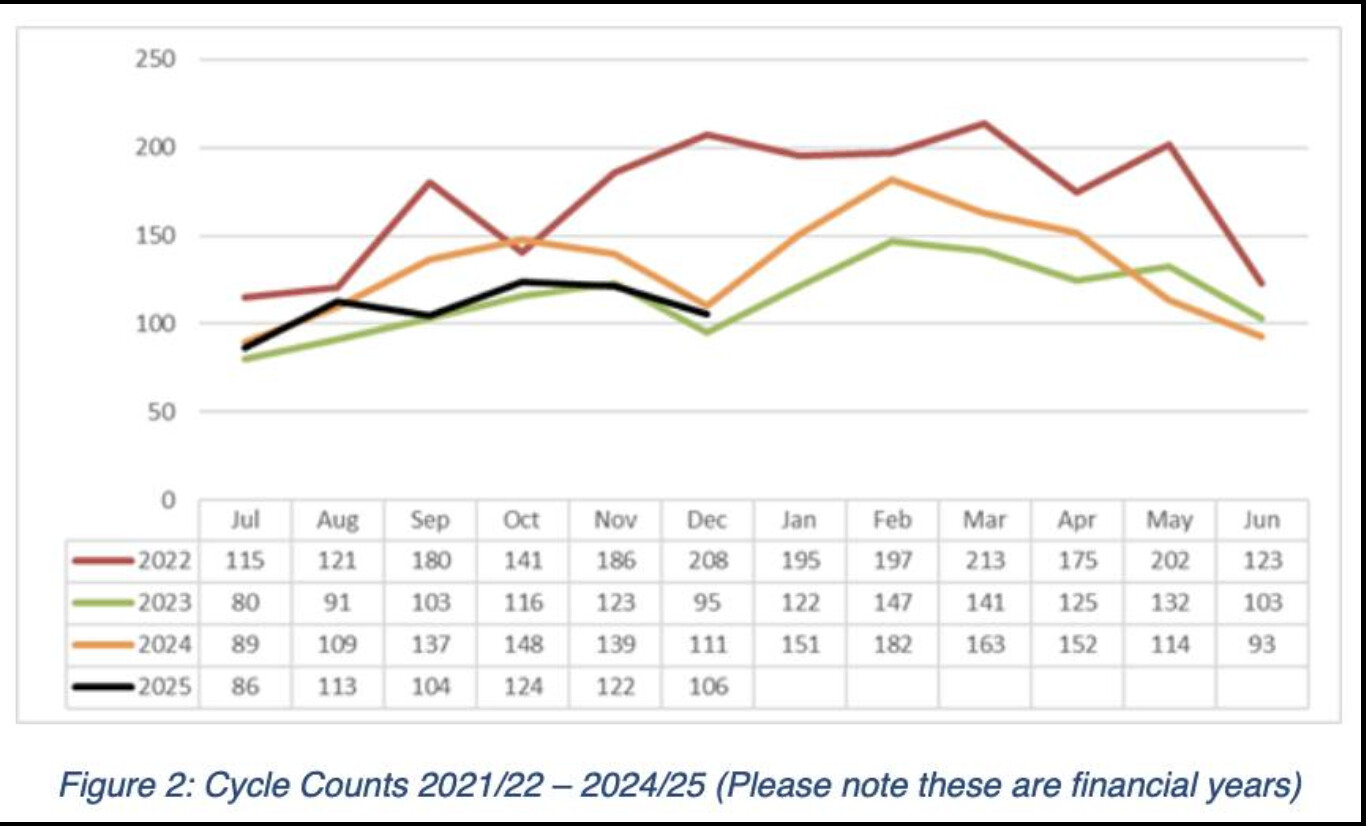
A disproportionate hundreds of millions in DCC budgets has been spent by Cull Hawkins and Radich Councils, which is financially uunsustainable,especially when you consider the official DCC cycleway average usage has not increased in the 4 years of this accurate DCC usage data that we now have.
For this reason, I have not supported the Peninsula $24,000,000 far end cycleway extension to the Marae because it fails to meet NZTA safety priority or use priority and is seen by some as an opportunity to also run 3 waters services [$50,000,000+?] to this sparsely populated area once the road gets dug up anyway.

Kind regards,

Lee Vandervis

Hi Lee,

Thank you for your clearly articulated reply, which demonstrates that you take these issues seriously. Many SPOKES members agree with you that:

  1. Utilising Leith Street (especially if converted into a ‘quiet street’) has the potential to be better for all parties than the existing One-Way cycleway.

  2. A safe crossing of Portsmouth drive (including good access to the Edgar Centre) for people using active transport needs to be established urgently.

However, while reviewing your reply, we noticed a few inaccuracies. With your consent, we’d like to edit your reply to correct these before publishing it. Here are your statements and our suggested edits:

The current One-Way cycleway has been costly and underused for six years.

Removing the One-Way concrete barriers would restore 160 much needed car parks to access shops, the Hospital, Museums, and University.

Cyclists are especially vulnerable, as much data like this shows that (per km travelled) cyclists are 4 times more likely to be injured or die than motorists. Also, motorists are 4 times more likely to injure or kill other road users than cyclists.

A disproportionate tens of millions in DCC budgets has been spent by Cull, Hawkins, and Radich Councils. This is financially unsustainable, especially when you consider the official DCC cycleway average usage has not increased in the 4 years of this accurate DCC usage data that we now have.

Hi Nathan,

Thank you for your detailed suggestions on improving the accuracy of my cycleway-related statements.

A - “The current One-Way cycleway has been costly and underused for six years.”
My experience is that the NZTA and DCC have been spending investigation time and money progressing the One-Way cycleway since 2012, making my statement “The current One-Way cycleway has been costly and underused for over a decade.” fair and reasonable if a bit inaccurate on the number of years it has been actually been used.
I could amend my statement to read ‘…costly for over a decade and underused since commissioned 6 years ago’ if you think that might be substantially different.

B- ‘My statement “Removing the One-Way concrete barriers would restore hundreds of much needed car parks to access shops, the Hospital, Museums, and University.’ was in the context of all the changes involved in the long process of installing the underused One-Way Cycleways, not just those parks directly blocked by the concrete islands. If you look at the whole number of carparks removed along both One-Way streets to enable the cycleways, I think you will find that ‘hundreds of much needed carparks’ could be restored when moving both One-Way cycleways to calmer Lieth st.

C – you dispute “Cyclists are especially vulnerable as much data like this shows that cyclist are 10 times more likely to die on City roads that motorists.” claiming “4 times more likely to be injured or die than motorists.” Where is your evidence for this differently focused and wildly different statement?
Here you are both wildly wrong and muddying the waters by adding ‘injured’ which my statement makes no claims about.
My statement significantly understates the death risk to cyclists, recognising many different countries variable statistics and that the data attached is just one example of UK data.
This data indicates that you are 40 x more likely to die on a bicycle than in a car, so perhaps I could change my statement by adding ‘at least 10x more likely to die’.
Note my statement refers to City roads.
Your erroneous “Also, motorists are 4 times more likely to injure or kill other road users than cyclists.” statement is noted.

D your disputing 100s of millions spent on cycleways by the Cull Hawkins and Radich Councils might be a point if you want to get really pedantic about exactly where the cycleway funding has come from and not include all the NZTA funding and the funding voted on and in budgets from the Radich Council.
When I count the cycleway funding committed by the Cull Hawkins and Radich Councils it does come to hundreds rather than tens of millions.

To summarise, I accept that I could have phrased some of my statements that you object to more precisely using more words, but that my statements are generally accurate, certainly more so than yours.
I will endeavour to be more precise in future statements on the cycleway issues that have become so important for a vocal minority in Dunedin, but urge you to look beyond the narrow zeal of Dunedin cycleways to the greater needs of the far greater mobile public of Dunedin.

Thank you again, Lee. Perhaps you are right, and we are best to leave your statements as is. With your permission, we’ll publish this conversation so that people can see your defence.

As to your other points:

Parking loss

Regarding the number of carparks, the 160 figure of net parking space loss is taken from the NZTA 's explainer of the project. In contrast, your figure seems pulled out of the air.

Cycling Safety vs Driver Safety

I indeed made an error in my reply to you: I meant 4 times more dangerous for cyclists per hour spent travelling (NOT per km).

This was sourced from the NZ Ministry of Transport Risk on the Road 2016, which I’m sure you’ll agree is more relevant than the UK example you sent us.

This document also contains a graph which is the same in essence with the one you attached (but NZ date of course, including injuries). They explain why comparing safety by distance travelled is misleading, and provide the recommended alternative. It makes your point (4X is still very significant), but grounds it much more solidly.

Harm to others

As to harm to others from one’s transport choices, that is not erroneous. Perhaps not congruent with the way many think about road safety, though.

Please do go look at my source (https://theconversation.com/road-safety-switch-to-cycling-to-keep-others-safe-131964) and think about it. I haven’t done a deep dive into their research methodologies, but it does make intuitive sense that larger and heavier vehicles are more dangerous to those on smaller ones (or no vehicle at all).

SPOKES and cycleways.

Lastly, we do not possess a “narrow zeal of Dunedin cycleways” as you accuse us of. We advocate for improvements to our city’s roads that will lead to things being better for all people, not just those using one modality. Only occasionally does this include dedicated cycleways.

Ta for your responsiveness Nathan and the offer to publish my responses, which of course I am happy for you to do if you publish them in full, including the UK Risc Graph.